


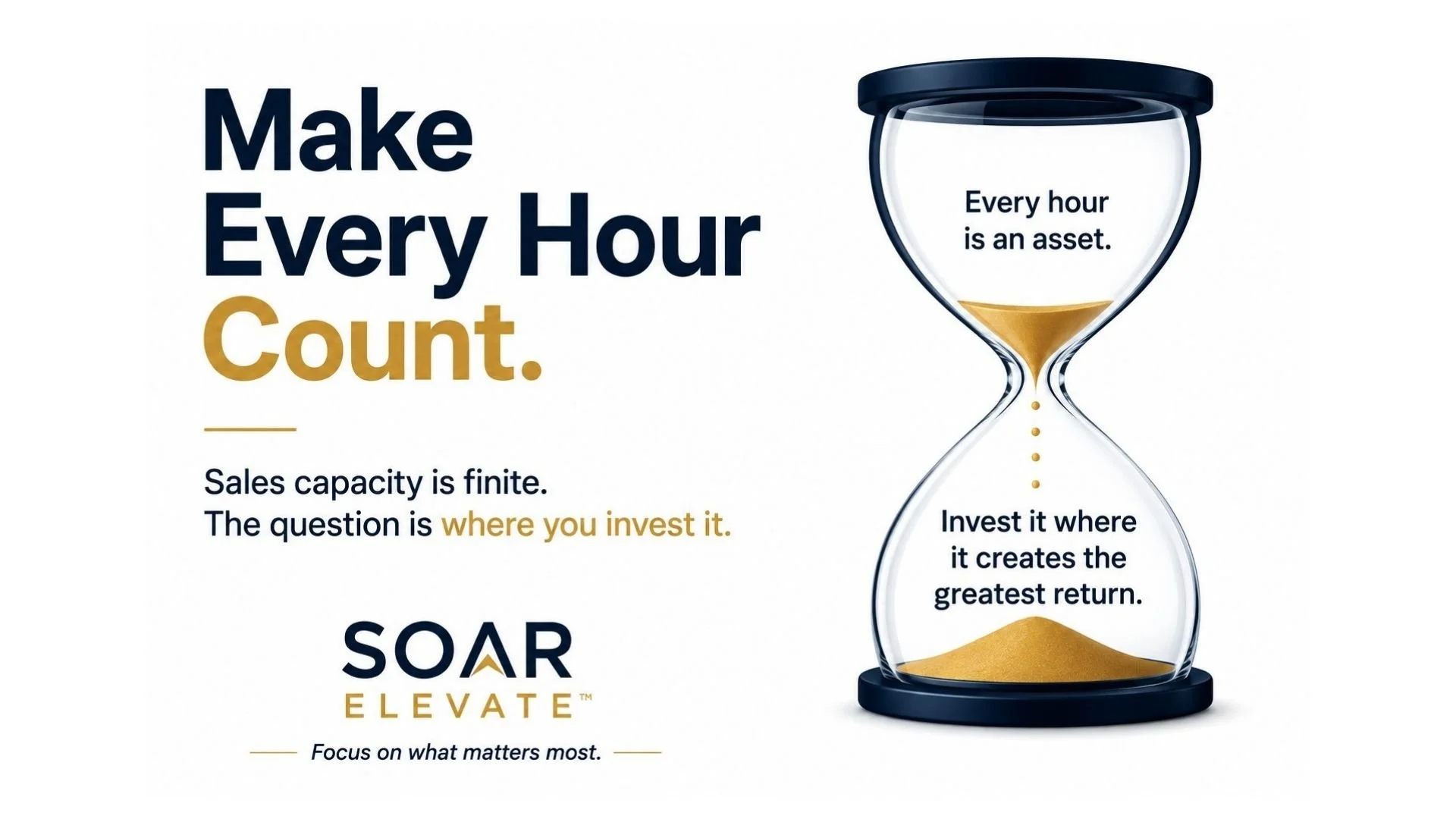
Sales Capacity: One of the Most Underutilized Strategic Assets in Your Business
Every CEO understands the importance of allocating capital.
Leadership teams spend months deciding where to invest money, hire people, expand capacity, acquire equipment, and develop new products. These decisions shape the future of the business.
But there's another asset that's just as valuable—and often receives far less strategic attention.
Your sales team's capacity.
Value Proposition: The 7th of 7 Key Foundations of Strategic Planning
Whether they're evaluating your company for the first time or deciding whether to continue doing business with you, every customer is asking one simple question:
"Why should I choose you instead of someone else?"
If your answer isn't clear, compelling, and differentiated, your competitors will answer that question for you. A strong value proposition isn't a slogan. It's the promise of value you consistently deliver to your customers.
Core Competencies - The 6th of 7 Key Foundations of Strategic Planning
Core competencies are the unique capabilities that differentiate your organization and create sustainable competitive advantage. They're not simply products or services. They're the combination of knowledge, processes, technology, talent, relationships, and experience that enable your company to deliver exceptional value.
Products change. Markets evolve. Technology advances. But well-developed core competencies continue to create value for years.
Values - The 5th of 7 Key Foundations of Strategic Planning
Most leadership teams can list their values. Far fewer can point to where those values actually influence decisions, hiring, accountability, or customer interactions. That’s the difference between having values—and using them strategically.
Culture: The 4th of 7 Key Foundations of Strategic Planning
Most leadership teams invest significant time defining strategy.
Far fewer spend time examining whether their culture can actually support it.
Risks & Threats: The 3rd of 7 Key Foundations of Strategic Planning
Most leadership teams are comfortable talking about growth opportunities. Far fewer spend time discussing what could actually derail the plan. Yet every strategy operates within a landscape of uncertainty. Markets shift. Competitors respond. Costs rise. Customers change behavior. The issue isn’t that risks exist. The issue is when they’re not openly acknowledged or thoughtfully planned for.
Weaknesses - The 2nd of 7 Key Foundations of Strategic Planning
Most leadership teams can list what their company does well. Fewer spend real time identifying what the organization struggles with. Yet in many businesses, weaknesses shape the strategy just as much as strengths do—only they do it quietly.
Strengths - The 1st of 7 Key Foundations of Strategic Planning
Most leadership teams can list what they’re “good at.” Far fewer can explain how those strengths actually create competitive advantage.
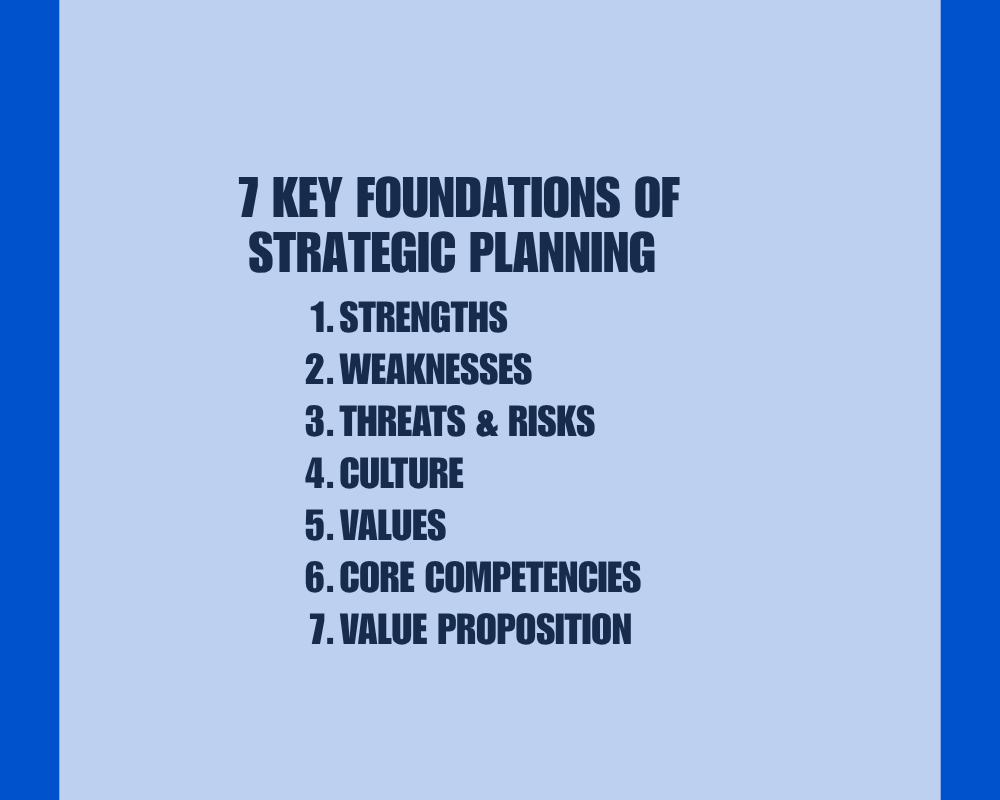
The 7 Key Foundations of Strategic Planning
Most strategic plans don’t fail because leaders lack ambition.
They fail because teams move too quickly to goals and initiatives-before fully understanding the business they’re trying to grow.